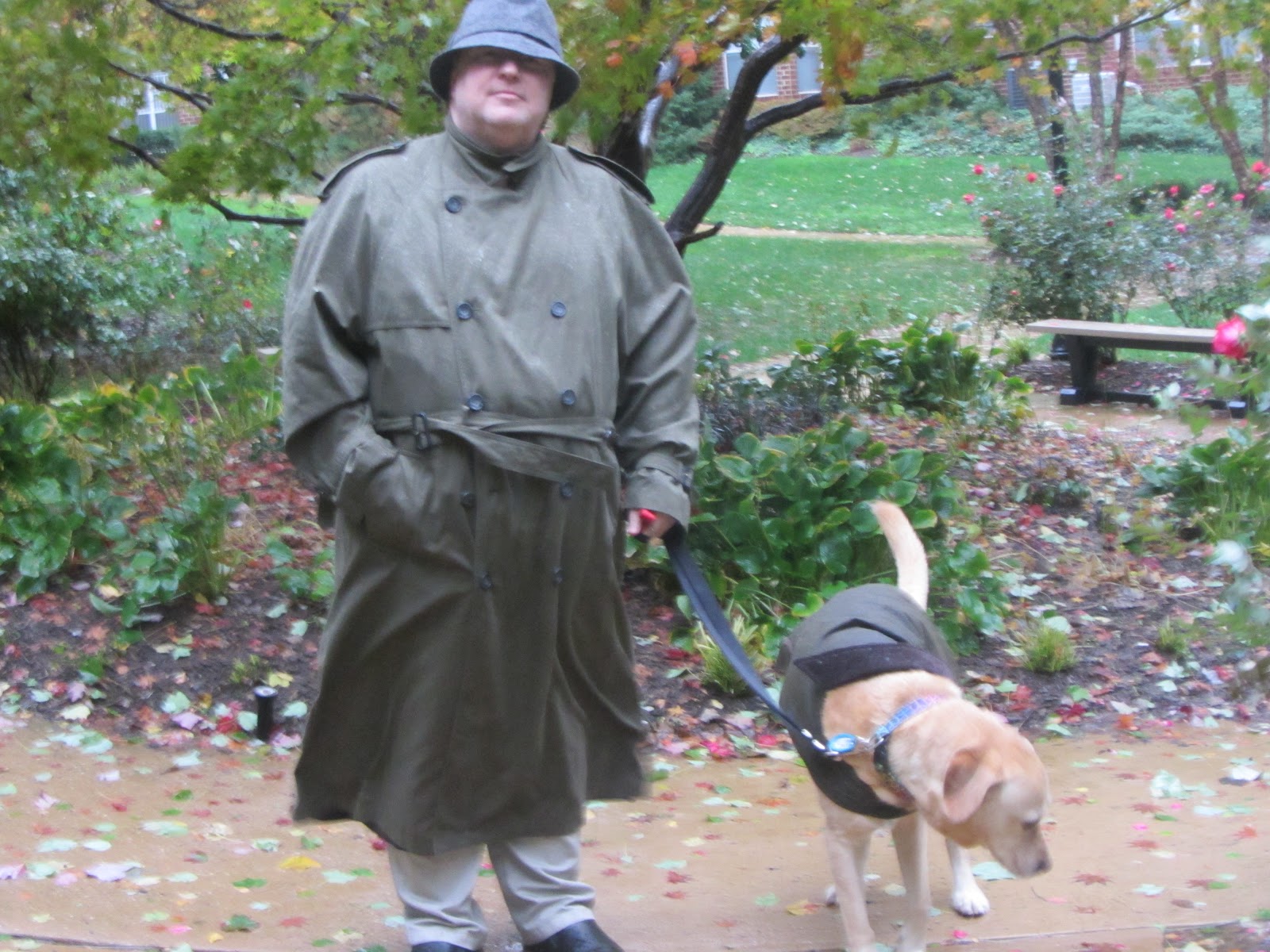
One dogs contem....contemp....con-tem..pla-tions on daily life........oh, stop rolling your eyes already and give me break, I'm a dog, for Gods sakes...
The benefits of puppy love: Why taking pictures of cute animals into the office could make you work harder
Putting a picture of a cute puppy or kitten on your desk could make you work harder, research suggests.
Looking at pictures of baby animals can improve your concentration by a tenth, a study found.
Researchers also discovered that people who gazed at photographs of puppies and kittens performed better than those who looked at images of adult animals.
Experts believe that becoming more focused is brought on by a cuteness-triggered positive emotion associated with taking motivation from anything that gives you happiness, pleasure, or joy.
The study based its findings on three groups of students - one which looked at images of baby animals, another which looked at adult animals and another which was shown pictures of tasty foods.
Each group was then asked to take part in exercises testing their concentration.
The performance of the group looking at puppies and kittens improved by an average of 10 per cent.
The students looking at adult animals saw performance increase by 5 per cent on average, but the images of food had little effect on the third group.
One of the authors of the study, Hiroshi Nittono of Japan's Hiroshima University, said: 'This study shows that viewing cute things improves subsequent performance in tasks that require behavioural carefulness, possibly by narrowing the breadth of attentional focus.
'This effect is not specific to tasks related to caregiving or social interaction.
'Cute features not only make objects more user-friendly and approachable, but also induce careful behavioural tendencies in the users, which is beneficial in specific situations, such as driving and office work.'
Lovesick Dog Finds Owner in Hospital
As John
Dolan lay in a hospital bed at the Good Samaritan Medical Center in Islip,
N.Y., last Thursday, he got a phone call he least expected.
A hospital employee, later identified as a man named Rick, told Dolan that he was standing outside the hospital with a white samoyed dog whose tag listed Dolan as the owner. The man told Dolan he needed to come pick up the dog because he was late for work.
Dolan, 46, said the dog was indeed his, but he couldn’t come right away because he was inside the hospital and his wife was asleep at their home, two miles away.
It was then that the two men wondered, how did Zander get so close to Dolan’s bedside, so many miles from home?
“It’s not nonsense that he was at the hospital,” Dolan, resting at home with Zander by his side, told ABCNews.com today. “He was moping around for the days I was already at the hospital, sitting in my seat and rolled up and depressed. My wife said he had water in his eyes and looked like he was really sad.”
Zander is a 70-pound, approximately 7-year-old samoyed-husky mix that Dolan and his wife had rescued from a shelter five years ago who has a history of escaping.
Once Dolan reached his wife, Priscilla, they realized that Zander must have slipped out the back door of their Bay Shore home after Priscilla Dolan took their other two dogs, a red shepherd named Sheba and a chocolate lab named Penny, out earlier that morning.
Priscilla Dolan didn’t realize Zander was missing until she got her husband’s call for help. She drove to the hospital to meet Rick and pick up Zander.
The Dolan’s home is two miles from the hospital, but a “hard two miles,” according to Dolan, that includes a stream, a highway and tricky navigation through neighborhood streets.
The hospital is also in a direction where Zander had never gone on his previous escapes.
“For all I know he was on his way to Jersey,” Dolan joked. “He’s gotten out in the past, but never gone to that location or anywhere near it [the hospital].”
Dolan said that of the couple’s three dogs Zander, in particular, is known to stick by his owner’s side and has been even more loyal since his return.
He says an important lesson from his dog’s amazing journey is for dog owners to properly tag their pets so that all reunions can have the same happy endings as his and Zander’s.
“It’s a cool story and uplifting,” Dolan said of his own tale. “Who knows how or why it happened.”
A hospital employee, later identified as a man named Rick, told Dolan that he was standing outside the hospital with a white samoyed dog whose tag listed Dolan as the owner. The man told Dolan he needed to come pick up the dog because he was late for work.
Dolan, 46, said the dog was indeed his, but he couldn’t come right away because he was inside the hospital and his wife was asleep at their home, two miles away.
It was then that the two men wondered, how did Zander get so close to Dolan’s bedside, so many miles from home?
“It’s not nonsense that he was at the hospital,” Dolan, resting at home with Zander by his side, told ABCNews.com today. “He was moping around for the days I was already at the hospital, sitting in my seat and rolled up and depressed. My wife said he had water in his eyes and looked like he was really sad.”
Zander is a 70-pound, approximately 7-year-old samoyed-husky mix that Dolan and his wife had rescued from a shelter five years ago who has a history of escaping.
Once Dolan reached his wife, Priscilla, they realized that Zander must have slipped out the back door of their Bay Shore home after Priscilla Dolan took their other two dogs, a red shepherd named Sheba and a chocolate lab named Penny, out earlier that morning.
Priscilla Dolan didn’t realize Zander was missing until she got her husband’s call for help. She drove to the hospital to meet Rick and pick up Zander.
The Dolan’s home is two miles from the hospital, but a “hard two miles,” according to Dolan, that includes a stream, a highway and tricky navigation through neighborhood streets.
The hospital is also in a direction where Zander had never gone on his previous escapes.
“For all I know he was on his way to Jersey,” Dolan joked. “He’s gotten out in the past, but never gone to that location or anywhere near it [the hospital].”
Dolan said that of the couple’s three dogs Zander, in particular, is known to stick by his owner’s side and has been even more loyal since his return.
He says an important lesson from his dog’s amazing journey is for dog owners to properly tag their pets so that all reunions can have the same happy endings as his and Zander’s.
“It’s a cool story and uplifting,” Dolan said of his own tale. “Who knows how or why it happened.”
‘Dog-shaming’ might be funny, but it’s not effective
A new trend that is nowive being seen online is the posting of pictures of pets that have done some sort bad behavior. Dogs are being represented the most but cats are starting to make an appearance as well.
These “dog shaming” posts represent very common behavioral issues that can occur when owning a pet.
These pictures may be posted for fun, but they also bring up a topic that is becoming a very serious situation for pet owners.
Bad behavioral issues are one of the leading causes of abandonment, relinquishment of ownership, or even euthanasia of pets. So that leads to the topic of behavioral issues and how to avoid them.
Some pets are doomed from the beginning because owners don’t research the right pet for their family, their house, or their lifestyle. Asking a Great Dane to live in a small apartment when the owner works twelve-hour shifts is asking too much. So the first step in avoiding bad behaviors is to research as extensively as possible to see what the right pet would be for your specific situation. Not only is breed important but so is size, energy level, personality and ability to be trained.
The next step is to socialize and train your dog at a young age. A dog that is used to different people (young and old, people who visit the house, and people encountered on walks) and different environments is a dog that will be better able to be in different situations without having behavioral problems. There are many resources available to owners. There are trainers, classes, books, videos, and veterinarians that can help get a pet off to a good start. Hard work at the beginning will pay off later.
During training, there are many ideas and theories of how it should be done. The two most effective ways are positive reinforcement of good behaviors and avoidance of bad behaviors.
Negative reinforcement after a bad behavior does not effectively train a pet. Dogs and cats do not have the mental capacity to learn this way because they do not remember cause and effect. For example, a dog chews up the carpet while an owner is away and the owner comes home and scolds the dog for doing this.
The next time the owner leaves and the dog starts to chew on the carpet, he or she will not remember the scolding and will not remember that is was associated with the carpet chewing.
Dogs remember the routine of something done over and over again and the addition of a positive reinforcement like a treat.
Avoidance is one of the keys to successful training. If a dog never gets to chew on the furniture and the carpet and only gets to chew on appropriate things, then over time it sinks in.
So as you are looking at the pets that have done something to get them posted online, please remember that even though it may be cute, it can lead to bigger problems later. And we should hope that these dogs and cats aren’t being subjected to negative punishments that can have adverse effects on them.
Dog Makes 500-Mile Journey Home
Bucky, a 3-year-old black Labrador, somehow traveled 500 miles from Virginia all the way home to Myrtle Beach, S.C., to be reunited with his owner, Mark Wessells.
“I thought I was going to cry, but I didn’t. He definitely recognized me instantly,” Wessells told TV station WPDE. “It’s just crazy he made it down here on his own. You know it’s like homeward bound is what I’m thinking.”
This past January, Wessells had to leave the dog with his father in Winchester, Va., because dogs were banned from where Wessells lives in Myrtle Beach.
But Bucky wouldn’t have it. Somehow, the dog managed to travel all the way home to South Carolina, by himself.
Two weeks ago, local resident Brett Gallagher found Bucky wandering through his “Carolina Forest” neighborhood, noticed he got along pretty well with his own yellow lab, Hannah, and took him in.
“Apparently the dog came up to them at 2 a.m. when Brett was out walking their dog. They were kind of scared at first, but he was friendly as can be. Brett put some weight on him. He was pretty emaciated when he first got him,” Lexie Grant from Grand Strand Animal Hospital told ABC News.
Gallagher looked on Craigslist and other local postings for ads that described the missing dog, but found nothing. So the temporary owner took Bucky into the animal hospital to get a physical done. This is when the veterinarian, Dr. Amanda Thomas, found his microchip revealing Bucky’s real name and his owner’s phone number.
“He was going nuts when the vet called him by his real name. His hears went right up,” Gallagher told ABC News.
As soon as Wessells got the phone call that Buck was at the nearby animal hospital, he made his way there to be reunited with his long-lost Labrador.
It’s still unclear exactly how Bucky made his way home, but Dr. Thomas thinks it may be due to the dog’s keen sense of smell. Apparently when Bucky returned to his owner’s house “he was rolling all around. He was just laying in all of his blankets just soaking up his smell,” Grant said.
Subscribe to:
Posts (Atom)